


Anyone can say “we make custom sofas.” This page shows what that actually looks like — every step of a real made-to-order sofa set we produced for a furniture importer in Saudi Arabia, from the first dimension drawing to the final tape-measure check. These are the actual working photos from the project, not staged marketing images.
Step 1 — The client sends dimensions, not a product code
This order did not begin with a catalogue number. It began with a hand-drawn layout: a 500 cm span, a 392 cm depth, and precise segment widths of 112 cm, 220 cm and 168 cm. The client wanted one frame with the seat divided into three parts, a chaise, and specific materials assigned to specific panels.
Below is the actual dimension and design drawing we produced and the client approved. Every number on it became a production instruction.
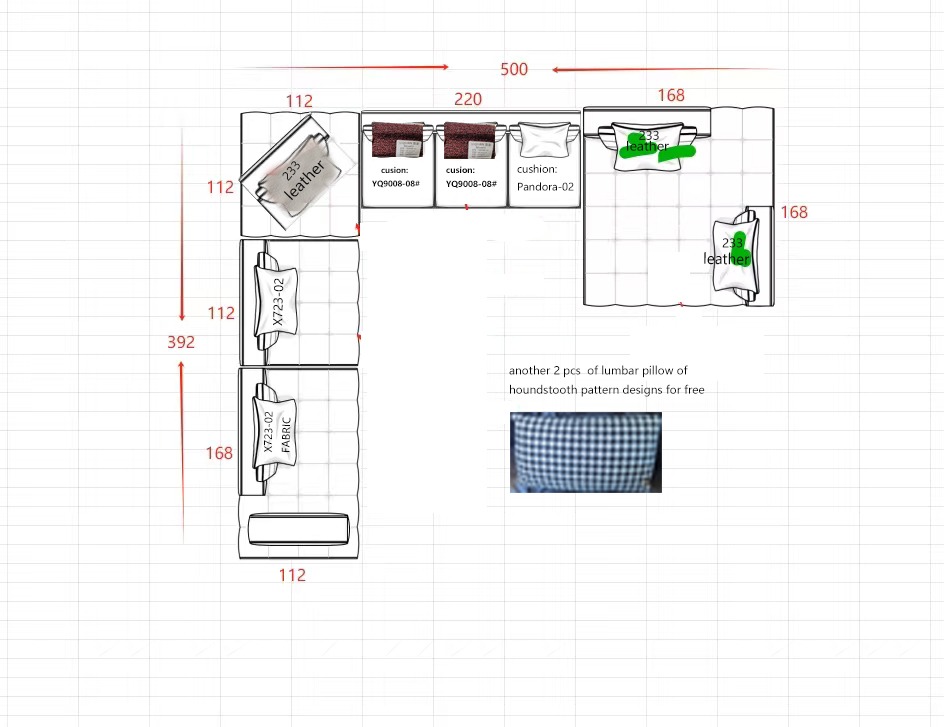
Why this matters: a real custom order is defined by a drawing like this. If a supplier never shows you a dimensioned layout with your materials marked on it, they are not engineering a custom sofa — they are finding the closest standard one they already make.
Step 2 — The client chooses the exact materials
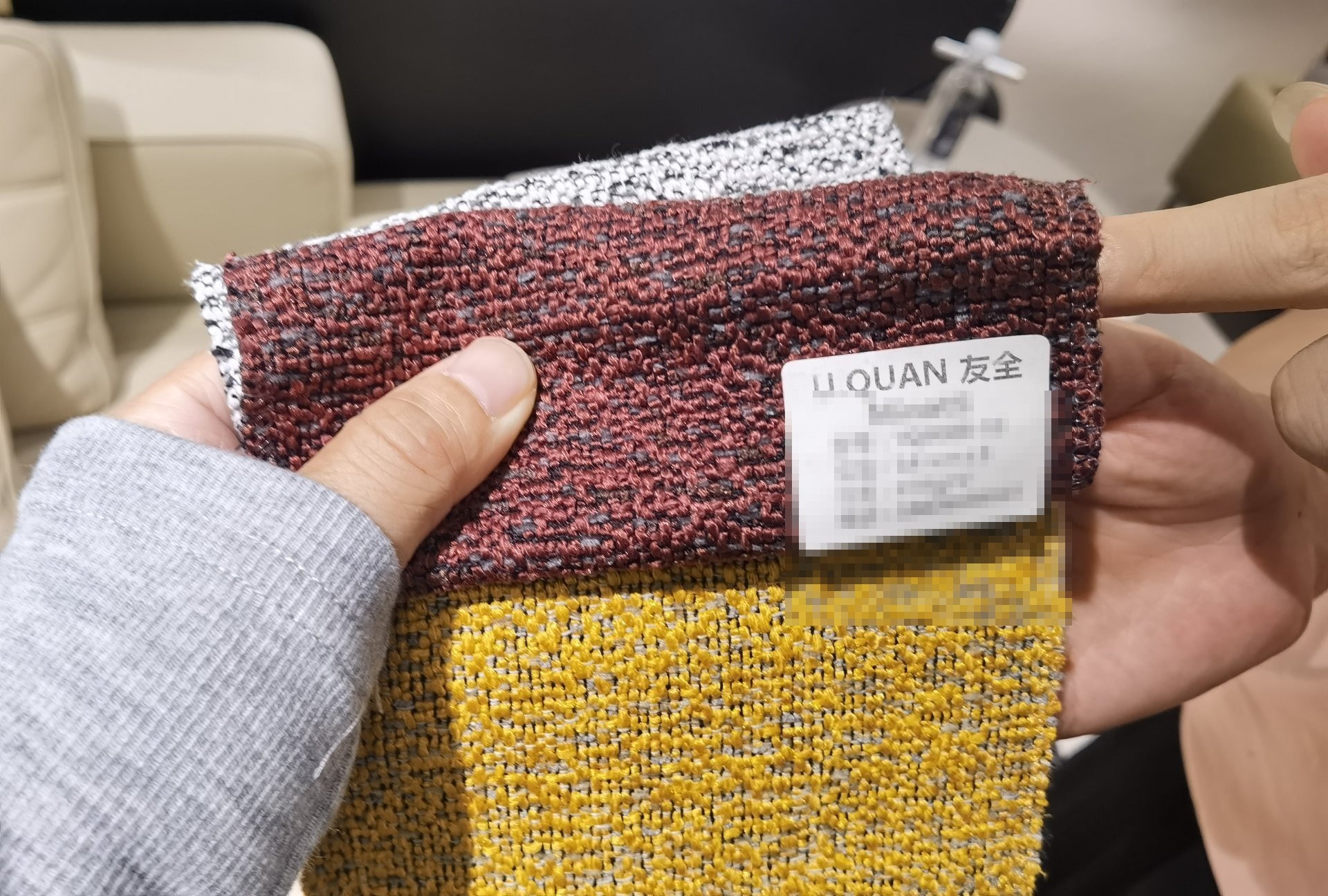
Next came the selection of leather and fabrics. The client specified each material by code, and we physically matched every one against swatches before anything was cut. Here are the real swatches from the project.
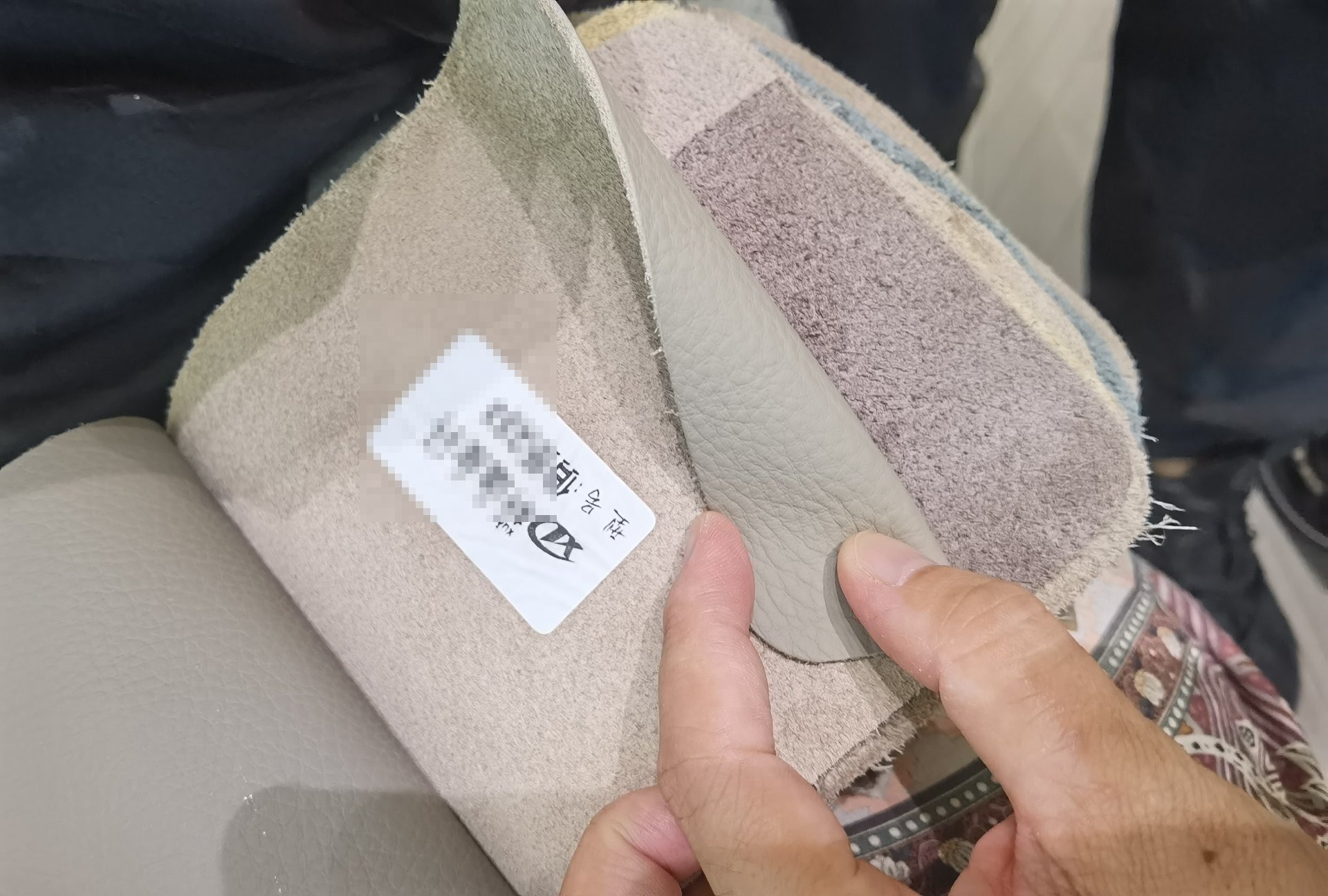
Genuine leather (code 233)
Used for the arm and back accents — a soft, grained leather in a warm greige tone.
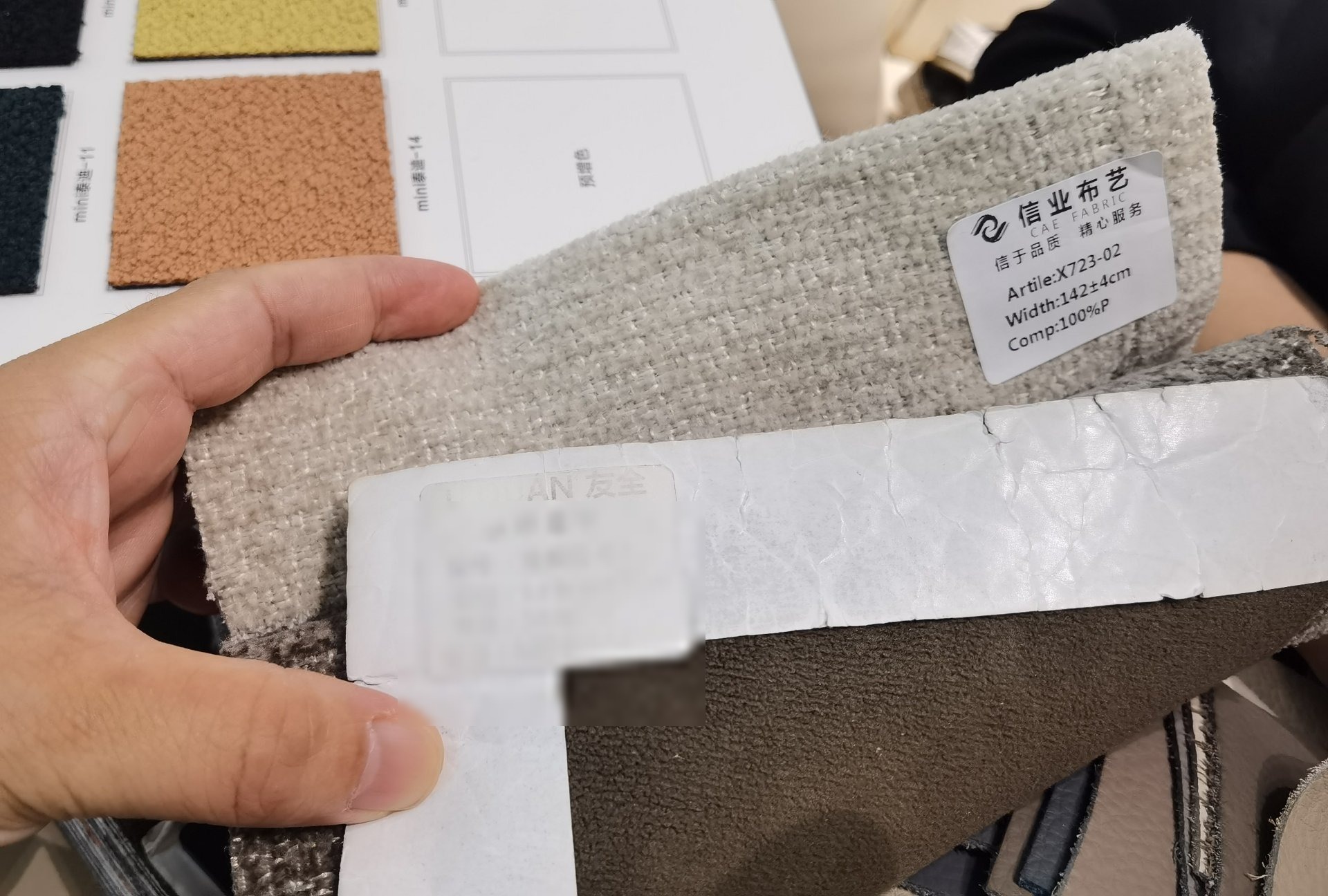
Woven body fabric (X723-02) and boucle cushion fabric (Pandora-02)
A tightly woven neutral fabric for the main body, paired with a textured boucle-style fabric on the seat cushions.
Burgundy accent fabric (YQ9008-08F)
A rich burgundy woven fabric used on selected back cushions to add depth to the neutral palette.
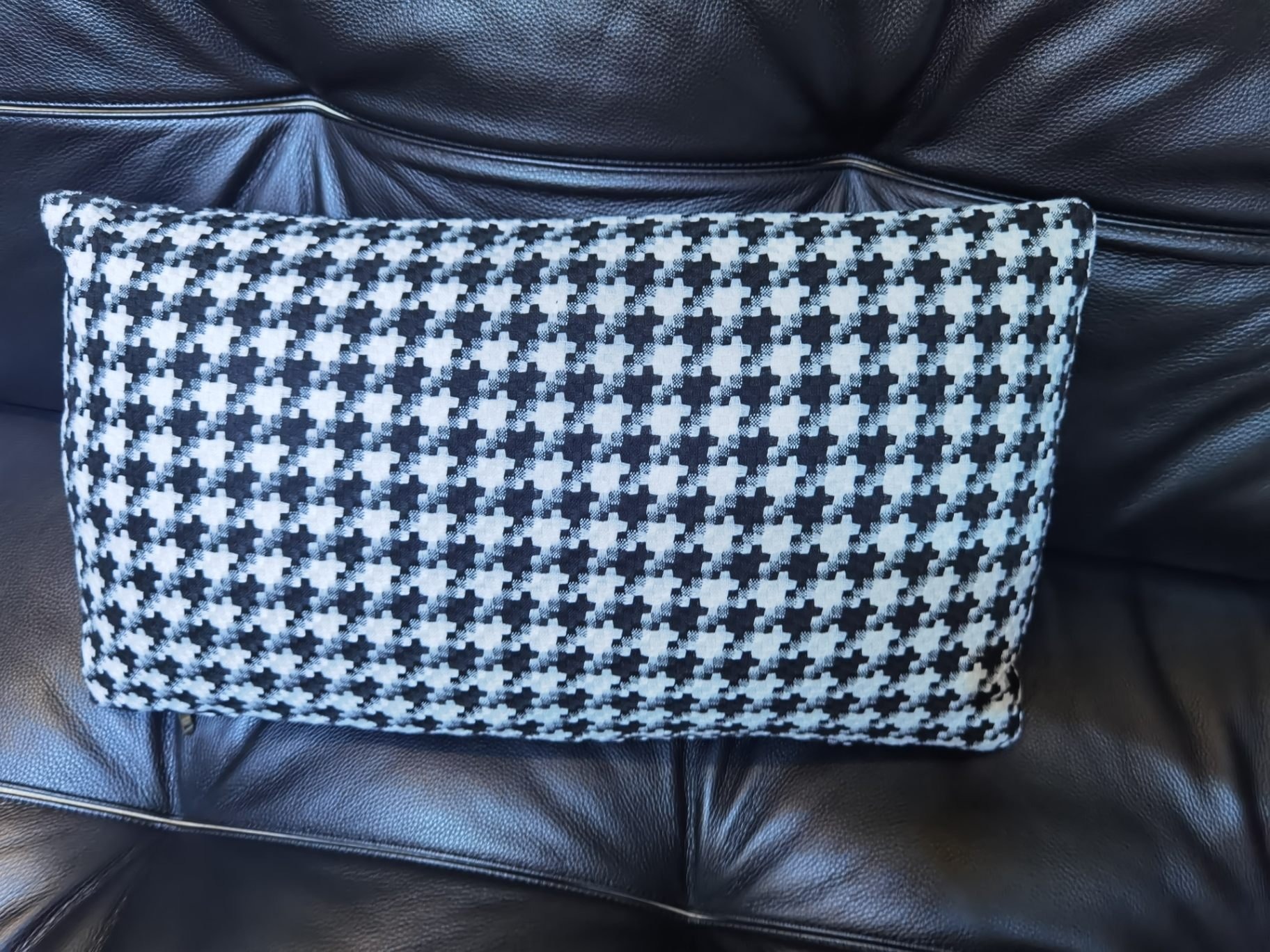
Houndstooth lumbar pillows
Two houndstooth lumbar pillows were included as part of the order — a small detail, but exactly the kind of thing that makes a set feel bespoke.
Step 3 — Sample approval before production
With the drawing and materials locked, we built a physical sample for the client to review. A drawing tells you the size; only a sample tells you how the leather drapes, how the boucle reads under showroom light, and whether the burgundy works beside the neutrals. Production started only after the client approved that sample.
Step 4 — The finished set
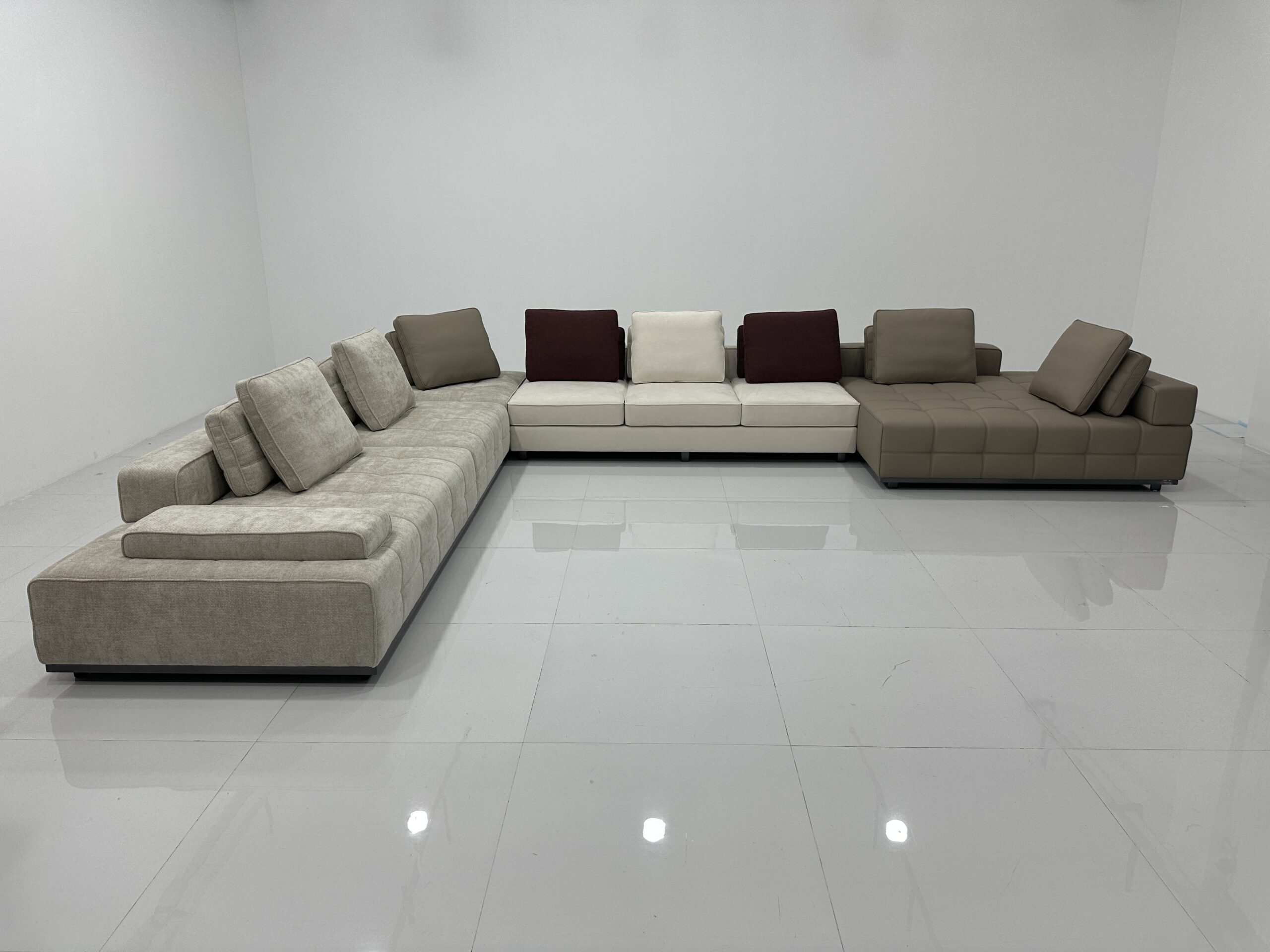
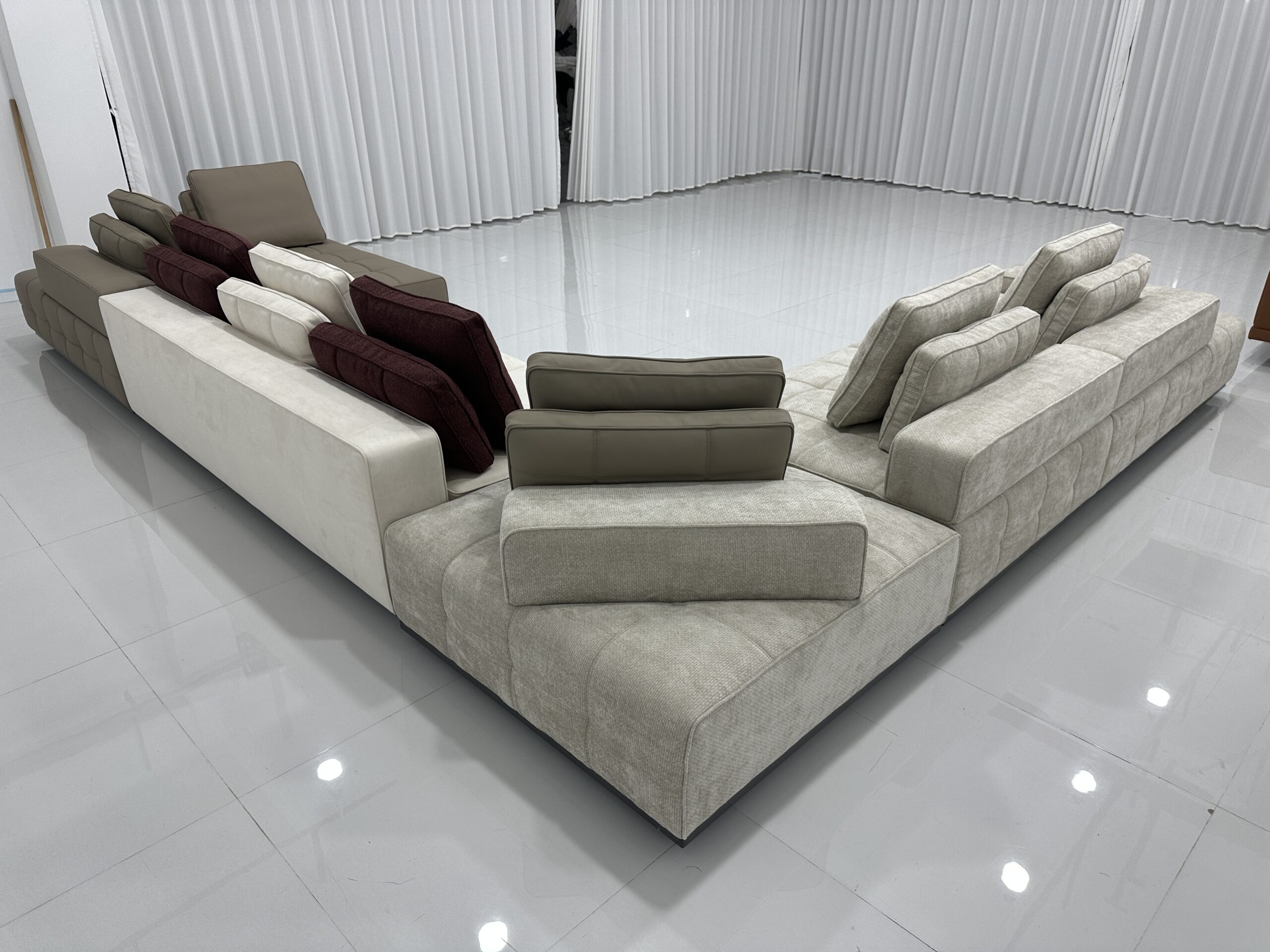
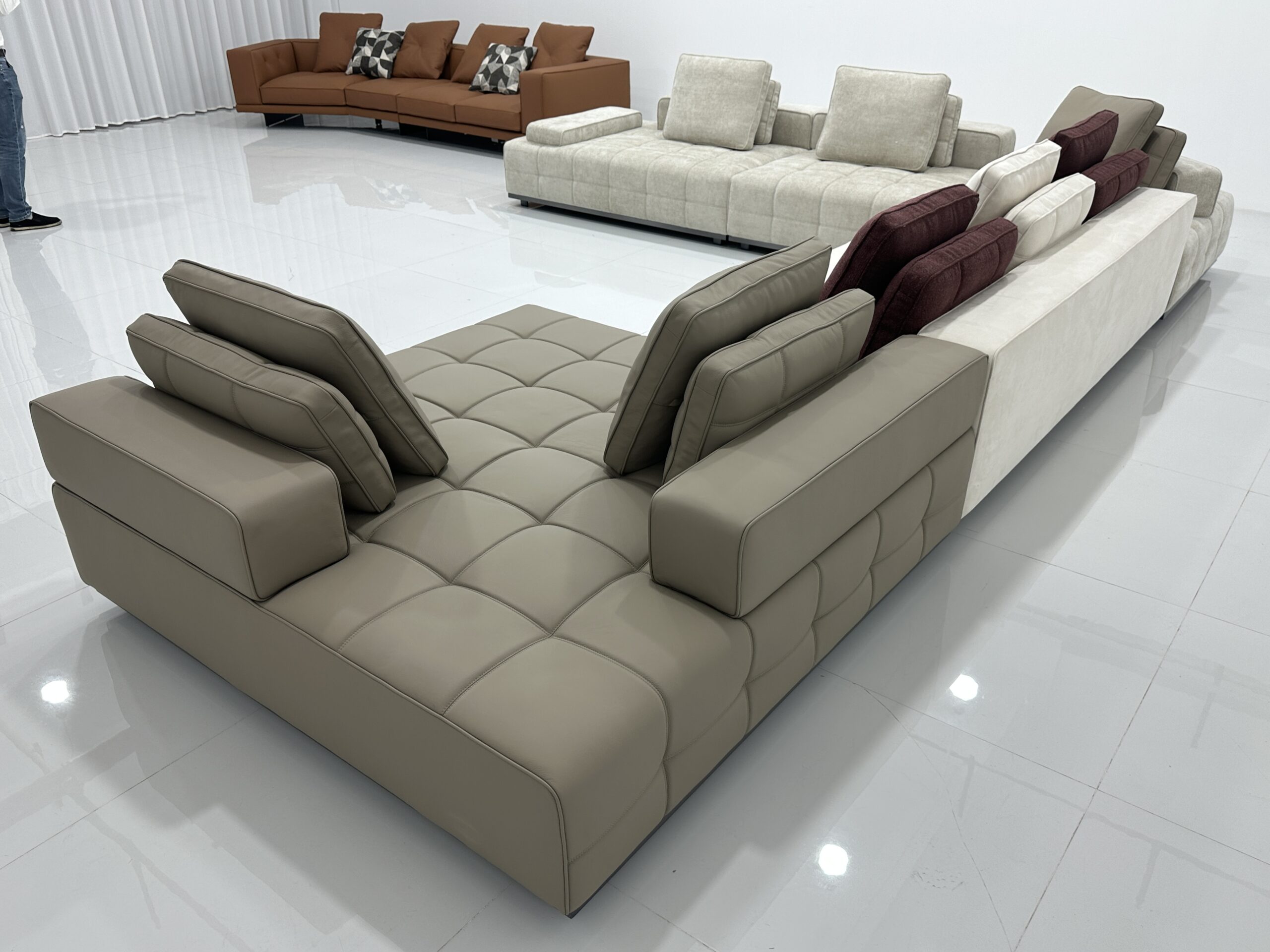
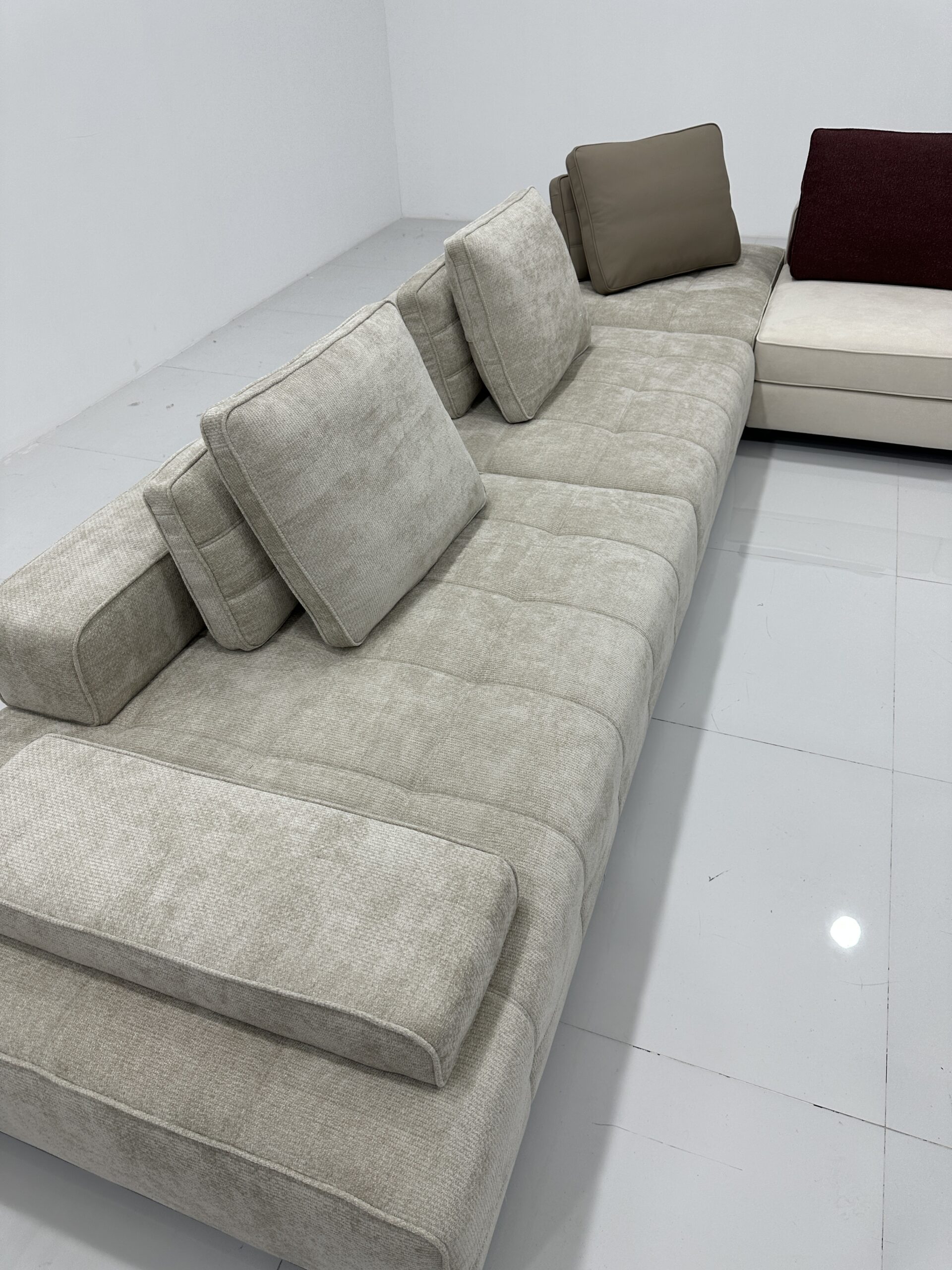
The result is a U-shaped configuration with a chaise, plus a separate two-seat unit — leather accents, boucle seats and woven backs combined in one set, built to the exact sectional proportions on the approved drawing.
Step 5 — Inspection: proving it is genuine leather
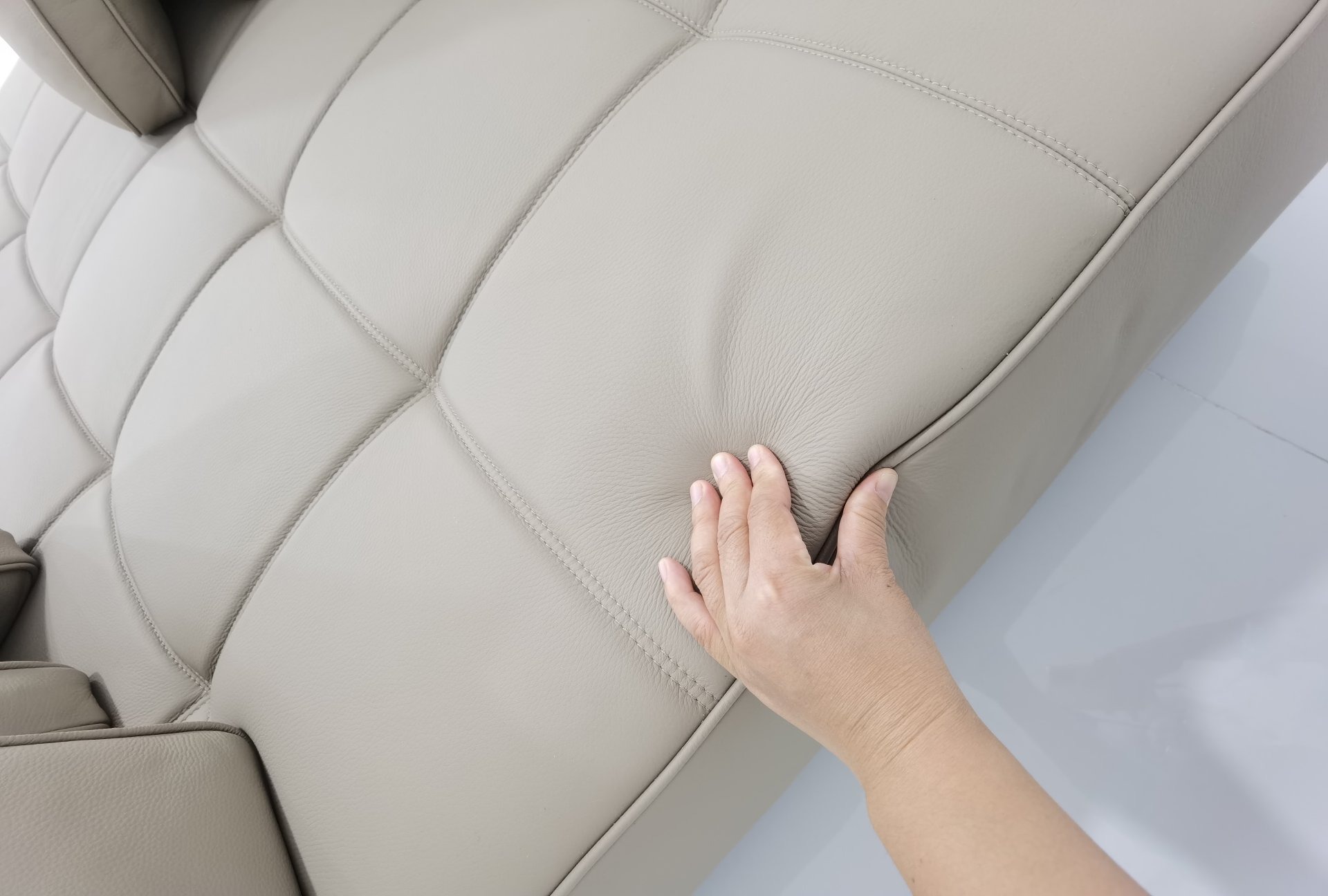
“Genuine leather” is a claim every supplier makes. Here is how we verified it on this order. Pressing real leather creates fine, irregular creases that radiate from the pressure point and spring back when released — a grain pattern synthetic PU cannot reproduce. The photo below is an actual press test on the delivered set.
Step 6 — Inspection: checking dimensions against the drawing
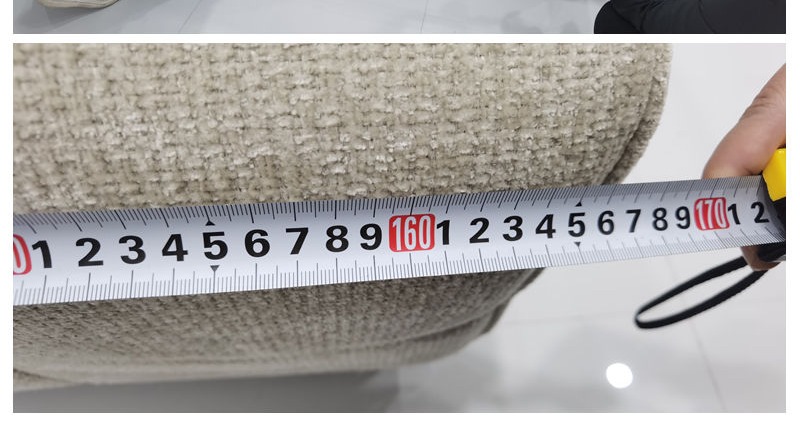
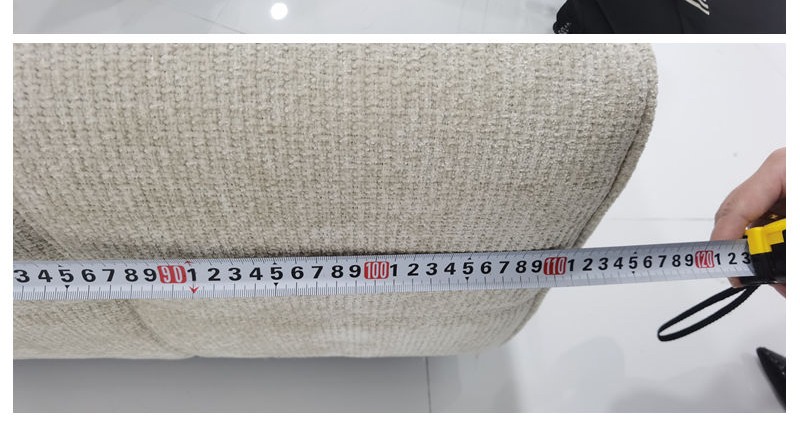
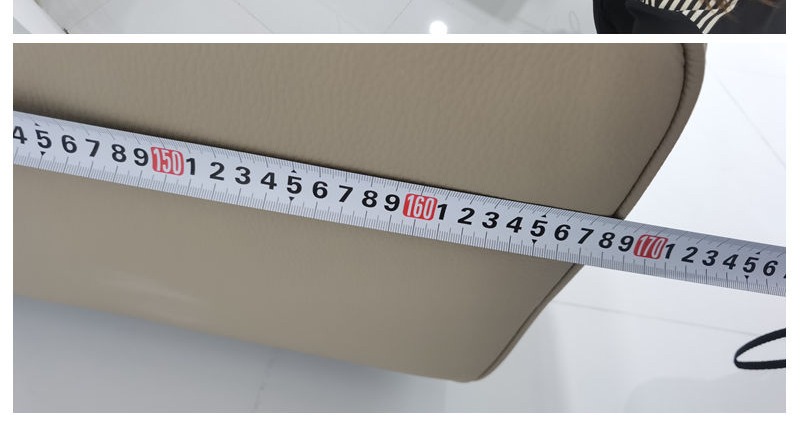
Finally, we measured the finished pieces against the approved layout — section by section — to confirm the sofa matched the dimensions the client signed off on. These are the real tape-measure checks from the inspection.
The point of all of this: custom is a process you can document. Drawing → material swatches → sample approval → finished product → material test → dimension check. We stand behind every order with that chain of evidence, because we specify, inspect and take responsibility for it — the partner factories we work with build it. We are not the factory owner; we are the people who make sure the factory builds it right.
Want a sofa made to your own dimensions?
Send us a sketch with measurements, a photo of the look you like, or just a description of the space. We will tell you honestly what can be made, source the exact materials, show you a sample, and photograph every check before shipment — the same process you have just seen.
ERGOVARI — custom sofas, made to your specification. Foshan, China.